High Intensity: Sharp Mind
 Sarah Wallace

This blog explores how high-intensity exercise can help prevent Alzheimer's disease and stall or slow down Mild Cognitive Impairment (MCI).
Disclaimer: The information provided in this article is for educational and informational purposes only and is not intended as medical advice, diagnosis, or treatment. While high-intensity, slow-repetition, low-impact resistance training is backed by research, it may not be suitable for everyone. Before starting this or any new exercise program, you should consult a qualified healthcare provider.
I don't know about you, but when I think about aging, one of the most frightening things that comes to mind is dementia, and even more specifically, Alzheimer's disease. It is a terrifying thought for everyone. But if you have a parent or grandparent who has battled it, then you know what it's like, and it's extra scary. Whenever you stand in front of an open fridge wondering why you opened it, or walk into a room - that isn't the bathroom - and completely forget why you are there, a quiet panic sets in: Is this the start? Is this a signal?
I like to brush it off as just a "senior moment." But is it? Who truly knows?
September is World Alzheimer's Month, which means it is the perfect time to stop worrying about the future and actually do something about it. Because we can.
In my yoga studio, and also with my friends, I am forever telling people that they need to focus on their muscles. We now know that muscle tissue is the absolute foundation of our metabolic health. Strong muscles improve bone density, cardiovascular health, help with diabetes, and manage weight loss and more. Muscles are the key to everything, including our brain and its health and longevity.
While mainstream public health organizations tell you to go for a casual walk or do moderate aerobic activity, advanced neurological science gives us much more important information: To shield our brain from cognitive decline, our muscles need a high-intensity load. (Mavros, et al., 2017). I was so happy to read that!
It's time to go beyond the brochure, because there is a lag between what some public health organizations recommend and what current research shows. For example, if you look up the recommended guidelines of the Alzheimer's Association in the USA, you will find a highly conservative approach. But they aren't alone. Our National Institutes of Health, specifically the National Institute on Aging, all recommend guidelines that don't tap into the power of high-intensity resistance training.
They recommend moderate-intensity aerobic exercise alongside a generic fifteen to twenty minutes of light strength work twice a week, mostly centered on basic balance and fall prevention. They also recommend daily walks and even gardening. There is nothing wrong with those activities, and in a way, I feel they're generic because the institutions are establishing these guidelines for millions of people at once.
When I was looking up all the research for this blog, I noticed the year of the Mavros study -2017 I mentioned above. It was a combined project with the University of Sydney, the University of New South Wales, and the University of Adelaide. I was wondering why guidelines aren't in step with information from 2017, and discovered there is always a lag between current research and recommendations for the public.
Fortunately, the medical community is starting to recognize that a one-size-fits-all approach does not work, especially for people with Mild Cognitive Impairment (MCI). Mild Cognitive Impairment is when you have a hard time recalling short term events and friends and family notice it. However, a person with MCI can still function independently in every way.
For people with MCI cutting edge research proves that high intensity is the way to protect the brain. That's good news! When it comes to addressing Mild Cognitive Impairment, research institutes and global medical networks are actively validating the precise biological mechanics that we use to structure our Wise & Strong classes. The foundational concepts we rely on are clear: challenging your muscles with progressive resistance exercise has been shown to support brain function and help preserve brain volume in ways that a casual walk, a jog in the park, or a 45 -minute swim simply cannot replicate.
Sometimes, when generic guidelines tell people to do strength training, many well-meaning older adults pick up a light weight—like a five-pound or eight-pound dumbbell—curl it ten times, and call it a day. If you stop the exercise while your muscles are still perfectly fine, you are performing low-intensity physical activity rather than high-effort resistance training. As a result, you miss out on the unique neurological shifts that happen when you increase the physical challenge. When you safely challenge a muscle group to the point of deep localized fatigue or failure under an appropriate resistance, you trigger a domino effect of cellular benefits that scientists have actually tracked using MRI brain scans. These benefits are:
The Hippocampus Shield
The Hippocampus is the brain's memory center. Clinical trials show that muscle gains helped with cognitive improvements in older adults with Mild Cognitive Impairments (Mavros et al.,2017) and a later study by the same lab analyzed MRI scans that proved resistance training attenuated atrophy in the hippocampus.
White Matter Integrity
High-intensity resistance training changes white matter integrity by strengthening its pathways and slowing down age-related degradation. White matter functions as the brain's vital communication network, acting like high-speed data cables that directly support processing speed and decision-making processes (Fisher Center, 2020).
Plaque Clearance
Advanced animal models suggest the metabolic stress of strength training helps the clearance of amyloid-beta plaques, which are a major presence in Alzheimer’s pathology.
The Lactate Fuel Tank
This process is highly specific to your fast-twitch (power) muscle fibers. Pushing these fast-twitch muscles close to temporary fatigue and failure produces an abundance of lactate. Far from being a useless waste product, this lactate crosses into the brain to optimize glucose metabolism and fuel vital neural pathways. Working these fast twitch fibers through high-effort resistance training raises blood lactate to the high concentrations needed to cross the blood-brain barrier. This surge safely floods your memory centers, triggering the natural release of Brain-Derived Neurotrophic Factor, or BDNF. BDNF acts as a powerful growth activator, helping new brain cells grow and repairing memory networks.
The Cardio vs. Strength Distinction:
A steady 45-minute swim or a jog along the rail trail are wonderful for your body and your brain. These endurance exercises boost overall blood flow, deliver fresh oxygen, and strengthen your heart and blood vessels. However, steady cardio mostly uses your "slow-twitch" endurance muscle fibers. Because of this, it does not create a large buildup of lactate in your blood. To get that massive surge of lactate to your brain to trigger growth—you need the intense muscle demand that comes from high-intensity resistance training.
Type 2 Diabetes
There is also a strong connection between Alzheimer's and Type 2 diabetes. According to research cataloged by the National Institutes of Health, having Type 2 diabetes can double a person's risk of developing dementia. The connection is so strong that scientists frequently refer to Alzheimer's as "Type 3 Diabetes" because both conditions are driven by severe insulin resistance.
When your body's cells stop responding to insulin properly, your brain cells also become "insulin resistant." This essentially starves your brain cells of the glucose energy they need to function and survive.
This is exactly where building lean muscle mass changes everything. A woman in my class, told me that her doctor said she needs more muscles because she has diabetes, and that's because our skeletal muscles are the body’s primary way for clearing sugar out of the bloodstream - muscles act as our largest storage area for muscle glycogen (glucose is stored as glycogen).
When you engage in high-intensity resistance training and push a muscle to temporary failure, you aggressively drain the muscle glycogen stores. To replenish that empty the storage, your body mobilizes glucose transporters to absorb sugar straight out of your blood and into the muscle tissue.
By developing more lean muscle mass, you are physically expanding your body’s glycogen storage capacity, dramatically reversing systemic insulin resistance, lowering chronic inflammation, and directly protecting your brain cells from the metabolic starvation that triggers Alzheimer’s pathology.
The power in our legs, with their massive muscle groups, makes them a great brain friend. Leading neurologists and clinical trials note that building lower-body muscle strength is an effective way to shield our gray matter from decline and preserve long-term brain health. In fact, targeted resistance training has been shown to significantly boost cognitive function in older adults, with important research demonstrating that the greatest improvements in brain power are directly driven by the physical strength gains made in our legs. (Mavros et al., 2017) Because our legs contain the largest muscles in the human body, they function like a massive biological engine. Supporting this, a landmark 10-year study on identical twins proved that leg power is the single strongest physical predictor of brain volume and memory sharpness as we age. Even when sharing the exact same genetics, the twin with stronger legs maintained a healthier, more youthful brain over a ten-year span.(Steves et al., 2016)
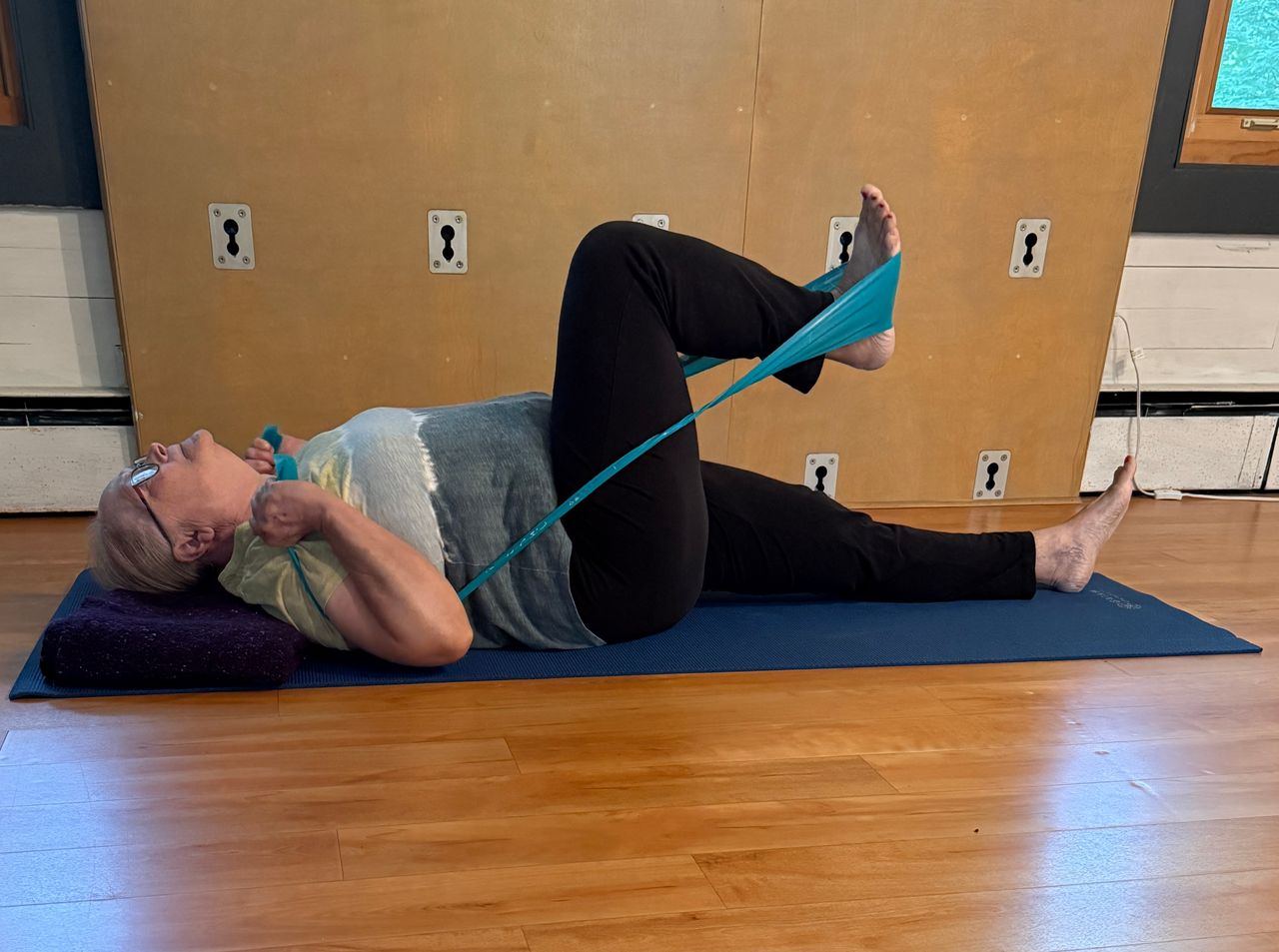
That is exactly why in our Wise & Strong classes, we bring our muscles to temporary failure using specialized leg exercises like the wall sit and the supine leg press. During the supine leg press, participants lie flat on their backs and push a heavy resistance band, or two, outward at an angle. It is a great exercise because bringing these massive muscles to failure creates a metabolic pump that sends crucial signaling molecules like lactate surging directly to the brain's memory centers triggering the release of (BDNF) . Best of all, by lying flat on the floor, our spine is 100% supported, our knees are protected from the harsh, crushing weight of a standard squat—which we don't do because many people have various knee issues—and there is zero risk of losing your balance. It is pure, safe, and a purposeful strategy for brain protection.
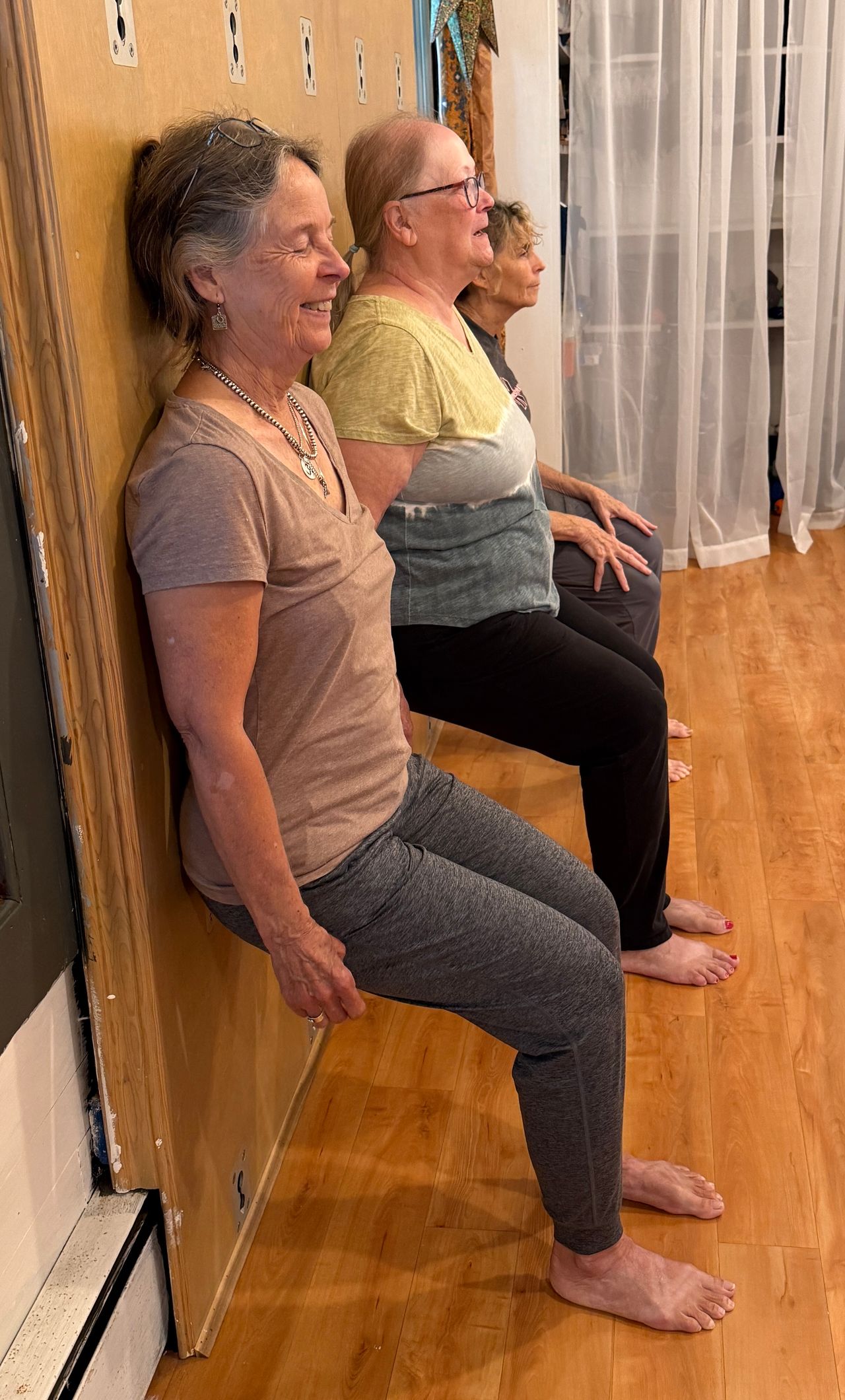
Another joint-friendly memory booster is the wall-sit that we do every week and for good reason! In medicine and in the exercise world the wall sit is in the category of isometric exercises (static muscle contractions without moving the joints). Chronic high blood pressure can cause micro damage to blood vessels and that can lead to dementia and Alzheimer's disease. An important medical study published in the British Journal of Sports Medicine revealed that static isometric holds like the wall sit with your muscles under constant tension, are twice as effective at lowering resting blood pressure as standard cardio [Edwards et al., 2023]. When you hold a wall sit, your thigh muscles squeeze the blood vessels in your legs. When you stand up, or go down to a bolster, there is a powerful flush that opens arteries and helps the blood vessels in the brain remain resilient. You protect the network in your brain from the micro damage that leads to dementia. If you're interested in learning about the Wall Sit for high-blood pressure, there is a video on the Amenia Yoga YouTube channel with the protocol. You can click on the blue. And, if you're interested in the Wall Sit for strength, come to class in studio or on Zoom!
When it comes to brain health, time is your most valuable asset. The research I mentioned earlier, highlight an important truth: it is so much easier to protect and preserve the brain tissue you have right now than it is to rebuild it later. Your brain can always grow and develop new neural pathways—a remarkable ability called neuroplasticity—and it responds most powerfully the moment you introduce a new, high-intensity stimulus. Waiting until symptoms become severe means missing an important window of opportunity.
The Bottom Line: Step up the resistance to localized muscular fatigue and failure. Even though it may sound intimidating, pushing your boundaries under a safe load is exactly how you signal your brain to adapt, grow, and build resilience against cognitive decline.
You do not have to do this by yourself, and you do not have to risk your joints or your balance to get these life-changing benefits. This World Alzheimer’s Month, give your brain the biological protection it deserves right now and create a powerful new habit. Whether you choose to join our community live at the physical studio or train from the comfort of your own home via our interactive Zoom classes, we are ready for you this week!
Together, we will guide you through safe, slow repetition momentum-free, challenges using body weight and resistance bands designed to build metabolically active muscle and deliver a pure, safe and effective brain workout!
For more information contact:info@ameniayoga.com
Resources:
- Alzheimer's Association. (2026). Physical Activity and the Brain: Get Moving. Alzheimer's Association Official Website. Available at: Alzheimer's Association (USA)
- Alzheimer's Disease International. (2026). World Alzheimer's Month. ADI Official Website. Available at: Alzheimer's Disease International
- Edwards, J. J., et al. (2023). Exercise training and resting blood pressure: a large-scale systematic review and network meta-analysis of 270 randomised controlled trials. British Journal of Sports Medicine, 57(20), 1317-1326. Available at: BMJ / BJSM Journal
- Fisher Center for Alzheimer's Research Foundation. (2020). Weight Training Twice a Week May Protect Against Dementia. Alzinfo.org. Available at: The Fisher Center
- Mavros, Y., et al. (2017). Mediation of Cognitive Function Improvements by Strength Gains After Resistance Training in Older Adults with Mild Cognitive Impairment: Outcomes of the Study of Mental and Resistance Training (SMART) Randomized Controlled Trial. Journal of the American Geriatrics Society. Archived in the National Institutes of Health (NIH) PubMed Central. Available at: NIH / PMC Database
- Steves, C. J., et al. (2016). Kicking Back Cognitive Decline: Leg Power Predicts Cognitive Aging in a Healthy Twin Cohort. Gerontology, 62(2), 138–149.
- World Health Organization. (2023). Risk reduction of cognitive decline and dementia: WHO guidelines. World Health Organization Global Report. Available at: WHO News Release